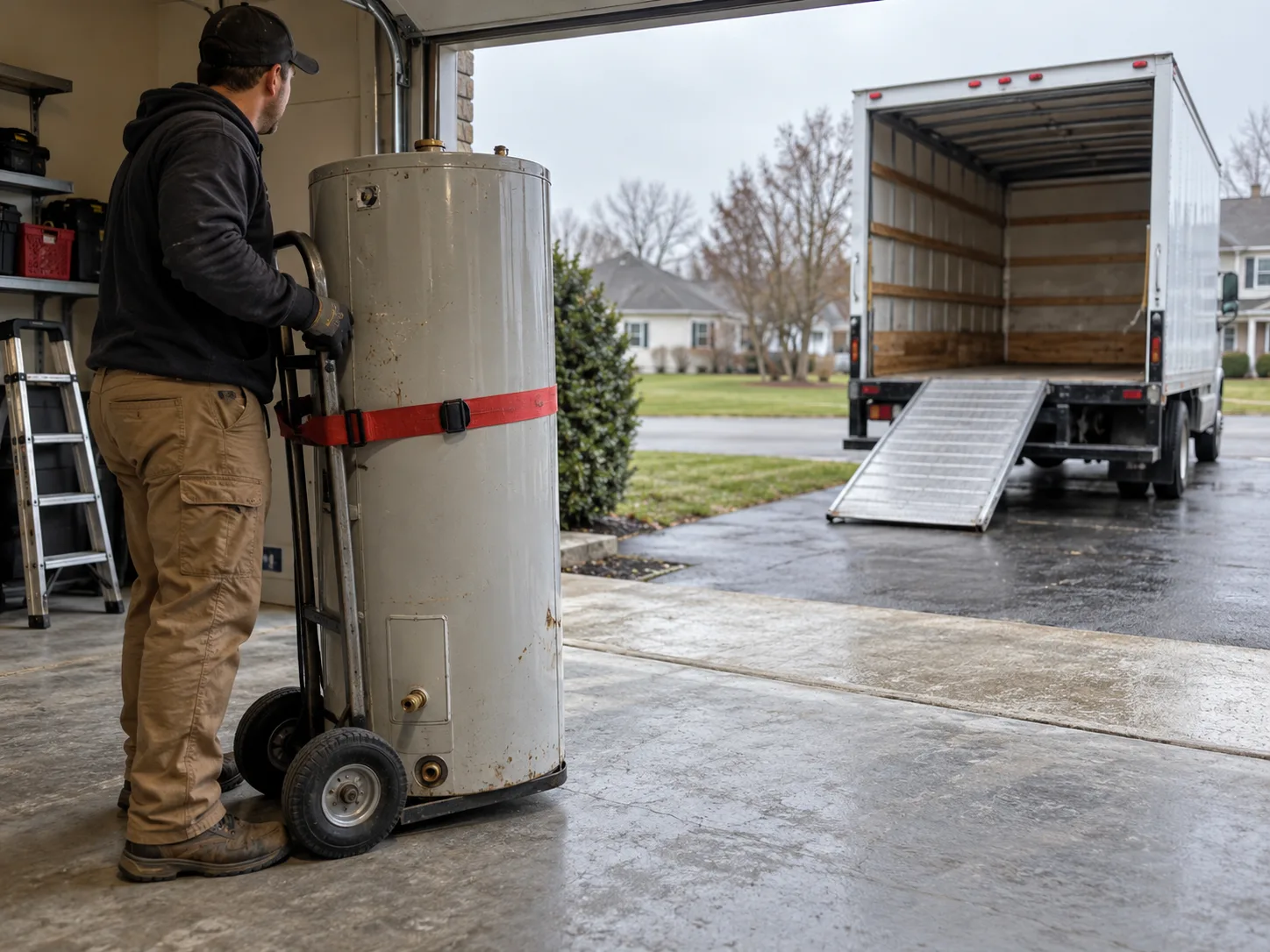
An old tank water heater should be drained, disconnected and accessible before a removal crew arrives. The tank’s condition and route matter as much as its nominal gallon size.
Separate plumbing work from hauling
Have a qualified professional disconnect water, power, gas and venting as applicable. The hauling appointment should not begin with active utilities or a tank full of water. If the replacement installer is leaving the old tank behind, confirm where it will be placed and whether stairs are involved.
| Detail | Why it matters |
|---|---|
| Tank height and diameter | Determines doorway and turn clearance |
| Drained status | Residual water adds weight and leak risk |
| Basement stairs | Changes crew and equipment planning |
| Corrosion or sharp edges | May require extra protection and handling |
| Other appliances | Affects truck space and estimate scope |
Show the full route
Photograph the tank in place, nearby connections after disconnection, each landing and the exterior loading point. Measure the narrowest doorway rather than the widest room. Move stored boxes and rugs, but leave the heavy tank where it is unless your installer has already relocated it safely.
Confirm pickup before the installer leaves
If the old tank will block the utility room, coordinate timing so it does not obstruct the new installation or household access. Route availability outside Kearney may depend on the day’s scheduled stops.
Review water heater removal or send the service line your tank and access details.